How to Market a Self-Published Children's Book
Start with an Amazon page that sells on its own: a clear cover, a good description, the right categories and a few honest reviews. Then go where parents and teachers already are: library story times, school read-alouds, local shops and markets, and people who know you. Most self-published picture books sell through the author's own effort, so pick two or three of these and keep at them for months rather than trying everything in launch week.
Publishing on Amazon puts your book in the store, but almost nobody finds a new picture book there on their own. The authors who sell steadily do a few things well, over and over, for a long time. This guide covers what to set up first and where children's books actually get noticed.
Get your Amazon page right first
Everything else you do sends people to this page, so it has to finish the job.
- The cover. It has to work at thumbnail size. See our guide to children's book cover design.
- The description. Write two short paragraphs. In the first, say what happens in the story. In the second, give the age range and the moment the book helps with, like a first day of school or a new baby, since parents often search for that moment by name.
- Keywords and categories. KDP lets you add seven keyword phrases. Use phrases parents type, such as "picture book about starting kindergarten", since single words like "kids" match too much. Pick categories that match the age and the topic.
- The "Look inside" preview. Make sure the first spreads are strong. People decide fast.
- An author page. Amazon's Author Central is free. Add a photo and a short bio so readers can see who made the book.
- A+ Content. KDP lets you add images and text below the description. For a picture book, show two or three interior spreads.
Early reviews, the honest way
A book with no reviews is hard to buy. Amazon's rules are strict here, and breaking them can get reviews removed or the account flagged.
- Allowed: giving free early copies to readers before launch, as long as you don't require a review or ask for a positive one. Teachers, librarians and parents in your target age group are good choices.
- Not allowed: paying for reviews, swapping reviews with other authors, or asking close family and friends to review. Amazon often removes reviews from people it can link to the author.
Goodreads is separate from Amazon's review system, and many parents and teachers use it. Add your book there too.
Read it out loud
Picture books are made to be read aloud, and that is the strongest way to sell one. When a child hears the story and laughs, the parent standing behind them is the buyer.
- Library story times. Ask the children's librarian if you can read at one. Bring a few copies and something small for the kids, like a coloring page of the main character.
- Classrooms. Teachers you know, your own kids' schools, and preschools. Offer a free read-aloud first. Some authors later charge for school visits, but the first ones build word of mouth.
- Video. A short clip of you reading a spread, or a child's reaction (with their parent's permission), shows what the book is like better than a photo.
Libraries and schools
Libraries buy books for children's sections every year, and a library copy gets read by many families. Ask at the desk who orders children's books and leave a copy with a one-page sheet: the cover, a two-line description, the age range, the ISBN and the price.
Libraries and schools usually order through distributors. A book available through Ingram is much easier for them to buy than one that is only on Amazon. Our guide to KDP vs IngramSpark explains how authors use both.
Local shops, markets and events
- Independent bookstores. Many will take local authors' books on consignment: they stock a few copies and pay you when they sell. Bring a copy and ask.
- Shops that fit the topic. A book about the dentist belongs in a pediatric dentist's waiting room. A book about a farm fits the farm stand. Gift shops, toy stores and museum shops take picture books too.
- Craft fairs and school fairs. Signed copies sell well in person. Order author copies ahead of time, since they take a while to print and ship.
People who already know you
Your first readers are friends, family, coworkers and other parents. That's normal. Tell them when the book is out, and ask them to tell one other person, or to request it at their library. Don't ask them for Amazon reviews.
A small email list grows slowly but keeps working. Put a sign-up link in the back of the book and on your author page, and send an email when you have something real to share, like a new book or a read-aloud date.
Paid ads, carefully
Amazon ads can put your book next to similar books, but a picture book earns only a few dollars a copy, so it is easy to spend more than you make. If you try ads:
- Start with a small daily budget.
- Use specific keywords, like the topic and the age, rather than "children's book".
- Check results every week and turn off anything that spends without selling.
Our guide to pricing a children's book shows how much you earn per copy, which tells you how much an ad can cost before it loses money.
Plan for months
Launch week matters less than people think. Picture books sell for years, especially ones that help with a common moment like bedtime, potty training or a new sibling. Pick two or three channels that fit you, maybe library story times and a local shop, and keep doing them. A second book helps the first one, because readers who like one look for more.
If you haven't finished the book yet, the free 7-day guide goes from first idea to publishing, and Write & Self-Publish a Children's Book in 7 Days covers every KDP step in detail.
Common questions
Can I give away copies in exchange for reviews?
You can give early copies to readers before the book comes out, as long as you don't require a review or ask for a good one. Paying for reviews, trading reviews with other authors and asking family to review are against Amazon's rules, and those reviews can be removed.
Do Amazon ads work for children's books?
They can, but picture books earn little per copy, so ads lose money easily. If you try them, set a small daily budget, use a few specific keywords, and stop any ad that spends without sales after a couple of weeks.
How do I get my book into my local library?
Ask at the desk who handles new books, and bring a copy. Many libraries take requests from patrons, so friends who use the library can request it too. Libraries order more easily through distributors like Ingram, which is one reason authors add IngramSpark.
When should I start marketing?
A couple of months before the book comes out. That gives you time to send early copies, line up a read-aloud or two, and tell people the date.
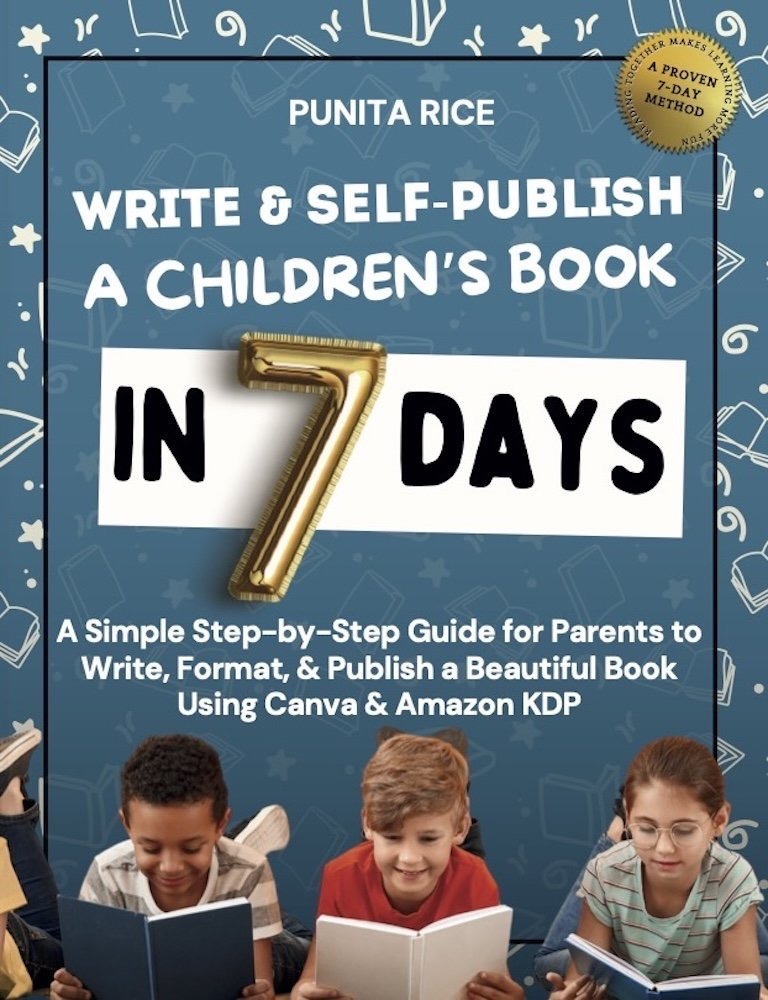
Write & Self-Publish a Children’s Book in 7 Days walks you through every step, including Amazon KDP. ★★★★★ 5.0 on Amazon.
Ready to make yours?
Make your bookOur 8.5 × 8.5 in Canva template for KDP costs $5 and has the bleed, margins and wraparound cover already set up.