How Punita Got Her Book Rights Back and Republished It Herself
Getting your book rights back is called rights reversion: the publisher returns the right to publish your book to you, usually under a clause in your contract. Punita Rice's 2019 academic book was priced above $100, and it took about five years of requests to get the rights back. She republished it herself in 2026 at a price teachers and families can afford.
Most self-publishing stories start with a blank page. This one starts with a finished, beautiful book that almost nobody could afford. Punita Rice, the creator of Write & Self-Publish a Children's Book in 7 Days, spent five years getting the rights to her first book back from a publisher, then republished it herself. Here is what happened, and what it can teach anyone deciding how to publish a book.
A good book at a price its readers couldn't pay
Punita's doctoral research at Johns Hopkins looked at what South Asian American students experience in U.S. schools. She turned it into a book, South Asian American Experiences in Schools: Brown Voices from the Classroom, published in 2019 by Lexington Books, an academic imprint of Rowman & Littlefield.
The book looked and felt wonderful. The hardcover was also priced above $100, and the paperback, which came years later, was around $50. That is normal for an academic press, because its main customers are university libraries with budgets for exactly these books. It was not normal for the readers Punita wrote it for: teachers, parents and South Asian American adults. They were never going to pay textbook prices for a book nobody assigned them.
What was in the contract
Like many first-time authors, Punita signed a standard deal because a book deal felt like the goal. Looking back, she has written that she signed before seriously asking whether traditional publishing was the right path for this book at all. The contract gave the publisher:
- The rights with no real end date, and reversion terms vague enough to leave it up to the publisher.
- Control of the price, entirely at the publisher's discretion.
- Royalties on net, not list price, at rates that were standard for the industry.
- No real marketing plan. That part was up to her.
Nobody did anything wrong. The contract was built around the publisher's business, which was selling a smaller number of high-priced copies to institutions. Her goal was to reach as many teachers and families as possible. Those two goals never lined up.
Five years of "not yet"
When she asked about lowering the price, the answer was no. When she asked about a trade edition, there wasn't going to be one. So she asked for her rights back.
The reply was polite and firm: the book was still selling, so the rights couldn't revert yet. Could she check back in a year? She did, every year, with follow-ups every few months in between. Each year brought a new polite version of "not yet": a planned discount, a new paperback, a small spike in sales, then a steady trickle that was just enough to keep the contract alive.
What finally changed things wasn't a better email. In 2024, Rowman & Littlefield went through a restructuring, and its academic publishing business, including Lexington Books, moved to Bloomsbury Publishing. During that transition, books like hers were reassessed, and when she asked again, the answer was yes.
Republishing it herself
In 2026, Punita republished the book as Brown Voices: South Asian American Experiences in Schools under her own imprint, Delville Press. She revised, edited and reorganized the writing and gave it a new cover. Most important, she set the price herself: a normal trade price for the paperback, an affordable ebook, and a hardcover for libraries that isn't priced out of everyone else's reach. It's sold on Amazon, in independent bookstores and through libraries.
She has told the full story, including the four mistakes she thinks she made, in The Story Behind Brown Voices: Five Years to Get the Book Back.
What to check before you sign a book contract
If a publisher offers you a deal, for a picture book, a memoir or your research, these are the questions her story says to ask first. This isn't legal advice: for your own contract, get an agent, a publishing lawyer or an experienced author to read it with you.
- Who sets the price? If you care who can afford your book, this matters as much as the royalty rate.
- How long does the publisher keep the rights? Look for a clear end point or clear conditions.
- When do the rights come back to you? A reversion clause tied to something concrete, like sales falling below a set level, is easier to use than one left to the publisher's judgment.
- How are royalties calculated? A percentage of net receipts and a percentage of list price can mean very different amounts per copy.
- What will they actually do to market it? If the answer is "not much", you'll be doing that work either way.
- Is traditional publishing right for this book? Ask this before the others. If you want control of the price and the audience, self-publishing may simply fit better.
When the answer to a question is "this is standard", that is a reason to do more research, not a reason to stop asking.
Why this matters for a picture book, too
Self-publishing means you keep the rights, you choose the price, and you decide who the book is for. For a children's book made for one family, or a small run for a classroom, that control is usually exactly what you want.
You can start small: make a book in the free maker, print it at home, and see how it feels. If you want a real paperback later, makeabook.fun makes free Amazon KDP files, and our overview of self-publishing a children's book on Amazon KDP explains how that works. Punita's book Write & Self-Publish a Children's Book in 7 Days walks through every step, and the free 7-day guide is a good place to begin.
Questions parents ask
What does it mean to get the rights back to your book?
It means the publisher gives up its right to publish the book and returns that right to you, the author. This is usually called rights reversion, and the terms are set by your contract.
Can a publisher refuse to revert rights?
Often, yes. Many contracts leave reversion to the publisher's judgment, especially while a book is still selling. That is why the reversion clause is worth reading closely before you sign.
What should I check in a book contract before signing?
Look at how long the publisher keeps the rights, when and how they come back to you, who sets the price, how royalties are calculated, and what marketing the publisher will actually do. Have someone with publishing experience read it too.
Is this legal advice?
No. This is one author's experience and a list of questions worth asking. For your own contract, talk to an agent, a publishing lawyer or an experienced author.
Ready to make yours?
Start your book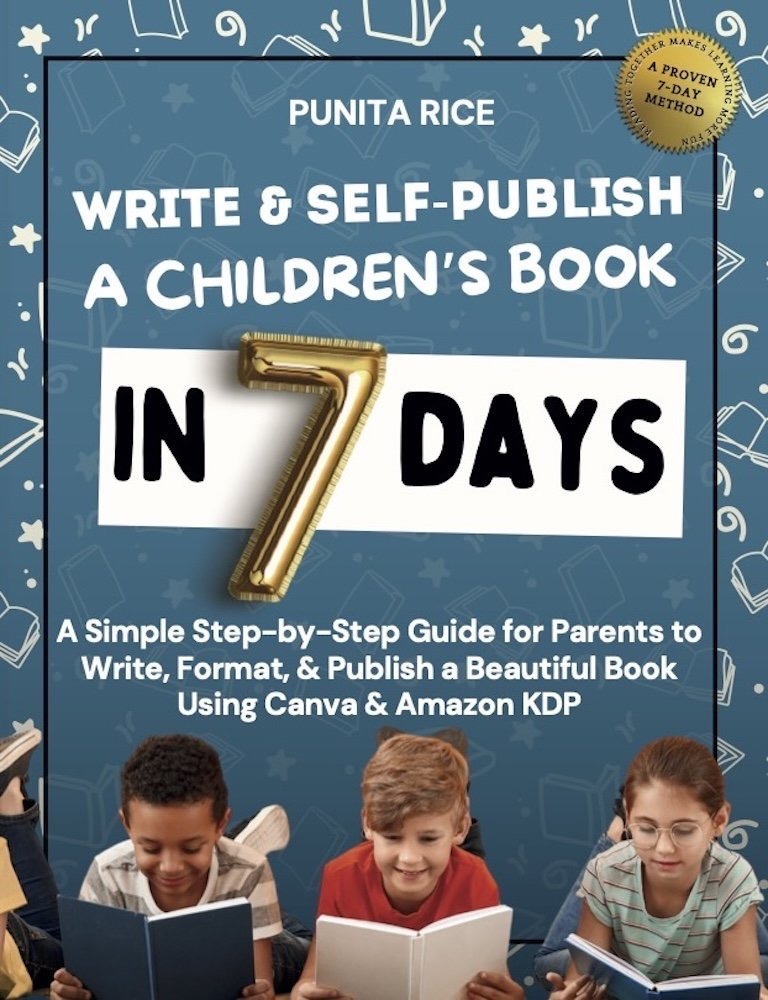
Write & Self-Publish a Children’s Book in 7 Days walks you through every step, including Amazon KDP. ★★★★★ 5.0 on Amazon.