Haircuts
How to Make a Haircut Social Story for Your Child
A haircut social story is a short, first-person book that walks your child through a haircut step by step: the cape, the chair, the spray bottle, the sounds of scissors and clippers, hair on the neck, and what they can do if it feels like too much. It works for salons and home haircuts. You can make one free at makeabook.fun.
A haircut social story is a short, personalized book, told in your child's own voice, that walks through a haircut one step at a time and gives them a plan for the parts that feel hard. It names the things that tend to bother kids, like the cape, the spray bottle, the buzz of clippers and the itchy bits on the neck, so nothing comes as a surprise. It works whether the haircut happens at a salon, a barbershop or your kitchen table.
Why make a haircut social story about your own child?
A personalized haircut story shows your child their own barber or stylist, their own chair and their own cape, so the book matches what they will see and hear. That match is the whole point: a haircut has a lot of new sensations packed into a few minutes, and knowing the order helps.
Social stories were developed by Carol Gray. They describe what usually happens in calm, literal words, from the child's point of view, and add what the child can do. Our guide on how to write a social story covers the format. Haircuts are a common reason parents make one, especially for children who are sensitive to sounds or touch.
What should a haircut social story include?
Describe each step of the haircut in order, name the sounds and feelings honestly, and give your child a clear way to ask for a break. Most haircut stories include:
- Where and who. The salon, barbershop or home spot, and the person cutting their hair.
- Waiting. What they can do while they wait their turn.
- The chair. A booster seat or a chair that goes up, or a kitchen stool at home.
- The cape. It snaps or velcros around the neck to keep hair off clothes.
- The spray bottle. Cool water makes the hair wet so it is easier to cut.
- Scissors and clippers. Snip-snip sounds, the buzz and tickle of clippers.
- Hair on my neck. It can feel itchy, and it gets brushed away.
- If it's too much. A break signal, ear covers, a toy, a show to watch.
- All done. A look in the mirror and something nice afterward.
A page-by-page outline you can copy
This 14-page outline is in first person, present tense. Replace the words in brackets. For a home haircut, swap the salon pages for photos of your own setup.
- Cover: "[Name] Gets a Haircut", with a photo of your child.
- Hair grows: "I am [Name]. My hair keeps growing. Sometimes it gets [long / in my eyes], so I get a haircut."
- Where I go: "I get my haircut at [salon name / our kitchen]." Use a photo of the place.
- Who cuts my hair: "[Name of stylist] cuts my hair. [She is / He is / They are] gentle and careful."
- Waiting: "Sometimes I wait for my turn. I can [play with my car / look at a book]."
- The chair: "I sit in the big chair. It might go up so [stylist] can reach my hair."
- The cape: "[Stylist] puts a cape on me. It goes around my neck. It keeps hair off my clothes."
- The spray bottle: "[Stylist] sprays my hair with water. It feels cool and wet."
- Scissors: "The scissors go snip, snip. Little pieces of hair fall down. Cutting hair doesn't hurt."
- Clippers: "The clippers buzz like a bee. They tickle on my neck. I can [cover my ears / hold my toy]."
- Itchy hair: "Little hairs might feel itchy on my neck. [Stylist] brushes them away."
- If it's too much: "If I need a break, I say 'break, please' or [hold up my hand]. We stop and I take three big breaths."
- The mirror: "When we are done, I look in the mirror. My hair is [shorter / neat]."
- After: "I did it. Then [we get a snack / I pick a sticker]." Add an "after" photo next time.
If you are also preparing for other appointments, the same format works for a dentist social story or a doctor visit social story.
Words that help on the hardest pages
The clippers, the itchy hair and the "too much" page usually matter most. Use plain, literal words, and make the break plan something you and your stylist will really honor. For example:
The clippers make a loud buzzing sound. The sound is loud, but the clippers don't hurt me. I can wear my [headphones] if I want.
Sometimes little hairs fall on my neck and feel scratchy. When the haircut is done, they get brushed off. I can wash them off at home.
If the haircut feels like too much, I can say "break, please." [Mommy] will help me take a break.
My hair grows back. Getting a haircut doesn't hurt, because hair doesn't feel the scissors.
When and how should I read a haircut social story?
Read it once a day for a few days before the haircut, then one more time right before. Bring it along and read it while you wait.
- Practice at home: put a towel around their shoulders like a cape, spray a little water, and comb their hair while you read.
- Play the sound: if clippers are the hard part, let them hear the buzz from across the room first, then closer, on a calm day.
- Tell the stylist: share the break word and which tools to use. Some families ask for scissors only for a while.
- Keep it short: a quick trim that goes well can be a better first goal than a full cut.
- Update the book: add a real "after" photo and print a fresh copy for next time.
This book helps your child know what to expect. It isn't therapy, so if your child has a therapist or teacher with a sensory plan for haircuts, follow their guidance.
How to make it on makeabook.fun
makeabook.fun is a free picture-book maker that works in your browser on a phone, tablet or computer. There is no sign-up.
- Start a blank book. Open "A blank book", which gives you twelve empty pages, and add more to fit the outline.
- Take photos. Ask the salon if you may snap the chair, cape and tools, or photograph your home setup: the towel, spray bottle and comb.
- Write one step per page. Upload photos and drag to reposition and zoom them. "Picture with words below" works well for walk-throughs.
- Draw what you can't photograph. On the built-in drawing pad, your child can draw the clippers buzzing or doodle a new hairstyle over their photo.
- Choose Andika, a font designed for children learning to read, so the words are easy to follow.
- Read it in the flip-through reader, then print.
Printing your haircut story
The free print-at-home PDF prints in full color, each page centered on US Letter or A4 paper with small corner trim marks. If the book will come to every haircut, the Keepsake edition ($2.99 once per book) gives you print-shop quality at the exact book size, no makeabook.fun mark, and a fold-and-staple booklet layout, and you can re-download it free after adding that "after" photo. Our guide on how to print a picture book at home covers paper and binding.
Questions parents ask
What is a haircut social story?
It is a short, personalized story, usually written in first person and present tense, that explains what happens during a haircut and what your child can do. It helps a child know what to expect.
Does a haircut social story work for home haircuts?
Yes. Just show your own kitchen chair, towel or cape, and the tools you use at home instead of the salon.
What should the book say about clippers?
Describe the sound and feeling plainly, like a buzz and a tickle, and say what your child can do if it bothers them, such as covering their ears or asking for scissors instead.
When should I read the haircut story?
Read it once a day for a few days before the haircut, then once more right before. Bring it along to read while you wait.
Is a haircut social story a form of therapy?
No. It is a simple tool to help your child know what to expect. If your child has a therapist or teacher, follow their guidance about haircuts and sensory needs.
Ready to make yours?
Free, right in your browser. Pick a story starter, add pictures, and print it at home.
Start a haircut story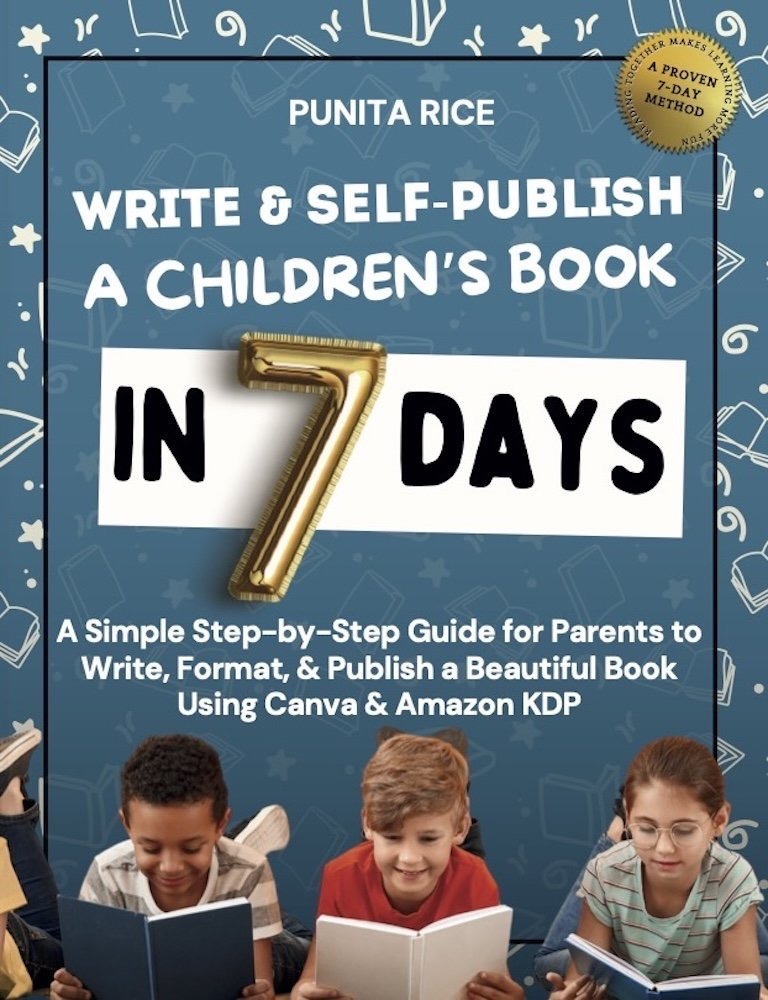
Write & Self-Publish a Children’s Book in 7 Days walks you through every step, including Amazon KDP. ★★★★★ 5.0 on Amazon.
Punita Rice made The Adventures of Hunny & Sunny, picture books about two bunny brothers who face their fears, find funny words and explore the solar system, for her own kids.
Meet Hunny & Sunny ↗